29
Sep 26
10 questions SaaS founders ask before building their first product
Having an idea for a SaaS product is the easy part
Turning that idea into a product people understand, need and are willing to use is where things become more complicated.
I’ve worked with founders at different stages of this journey, some arrive with little more than an idea – others have detailed feature lists, early prototypes or something they’ve already started building.
Although every product is different, the same questions tend to come up. Here are 10 questions SaaS founders often ask before building their first product and how I’d approach them.
1. I have a SaaS idea, where do I start?
Start with the problem, not the product.
Before thinking about screens, features or technology, get clear about who you’re trying to help, what problem they have and why your product needs to exist.
Try to define three things:
- Who is the product for?
- What problem does it solve?
- Why would someone choose it over the alternatives?
That sounds simple, but these questions can expose gaps very quickly.
At this stage, you don’t need to know exactly what the finished product looks like. You need enough clarity to start exploring whether the idea deserves further investment.
2. How do I know whether my SaaS idea is worth pursuing?
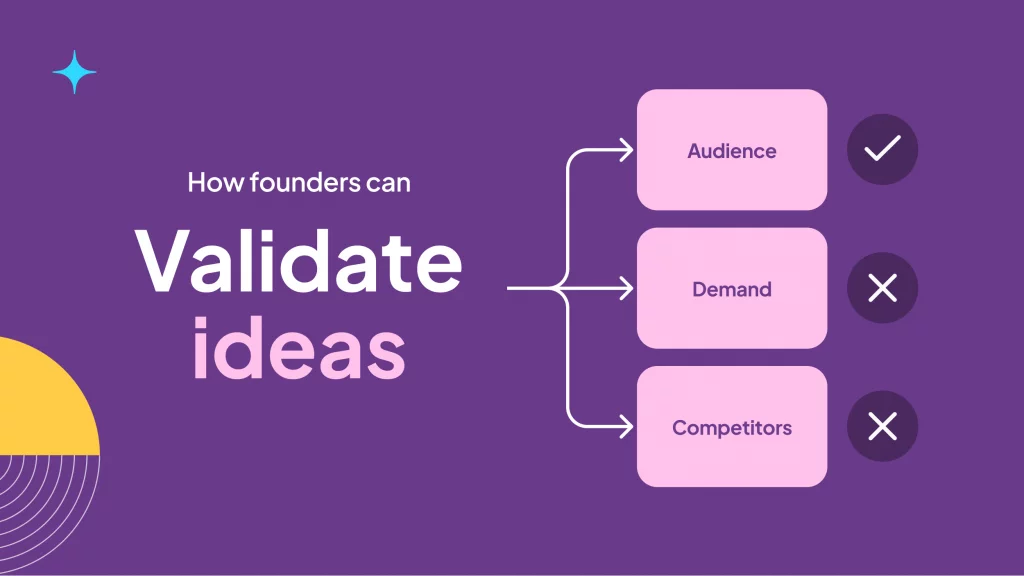
You won’t know with absolute certainty before you launch, but you can reduce the uncertainty.
Speak to potential users. Look at how they’re solving the problem today. Understand the alternatives they’re using and, importantly, whether the problem is significant enough for them to change their behaviour.
I’d be cautious about asking people simply, “Would you use this?”
People are generally positive about hypothetical ideas.
Instead, ask about what they do today.
- What frustrates them?
- How often does the problem occur?
- What does it cost them in time or money?
- Have they already tried to solve it?
You’re looking for evidence of a genuine problem rather than confirmation that your idea sounds good.
3. Should I speak to a product designer or a developer first?
If you’re still working out what the product should do and how it should work, I’d normally define the product before committing heavily to development.
A developer can help determine how something should be built.
A product designer helps work through what should be built, how users should interact with it and how the different parts of the experience fit together.
That could involve product discovery, user journeys, feature definition, wireframes and prototypes.
There’s naturally overlap between design and development, and involving technical expertise early can be valuable. However, going straight into development with an unresolved product idea can mean expensive decisions are being made in code.
4. What should be included in my MVP?
An MVP isn’t simply a smaller version of everything you eventually want to build.
It should be the smallest meaningful version of the product that allows someone to solve the core problem you’re targeting.
Ask yourself:
What does a user absolutely need to accomplish for this product to be useful?
Start there.
Features that support that core journey may belong in the MVP. Features that are useful but aren’t essential can potentially wait.
This can be difficult for founders because once you start imagining the product, almost every feature feels important.
Prioritisation is part of product design.
5. Do I need user research if I know the industry really well?
Industry knowledge is extremely valuable, but knowing an industry isn’t necessarily the same as understanding how individual users behave.
You may understand the market, terminology and common frustrations better than an outside designer ever could.
That’s an advantage.
Research helps combine that knowledge with evidence about how people actually work, where they struggle and what they need from a potential solution.
For an early stage SaaS product, this doesn’t necessarily mean commissioning months of formal research.
A handful of well structured conversations with the right users can uncover insights that significantly influence the direction of a product.
Your knowledge gives you a strong hypothesis.
Research helps test it.
6. What’s the difference between a prototype and an MVP?
A prototype demonstrates how a product could work. An MVP is a working version of the product that users can actually use.
A prototype might contain realistic screens and interactions without having the complete technology behind them.
That makes prototypes particularly useful for exploring ideas, reviewing user journeys, demonstrating concepts to stakeholders and testing usability before development.
An MVP goes further.
It needs enough real functionality to deliver the product’s core value to users.
You don’t always need to jump immediately from idea to MVP.
Sometimes a prototype can answer important questions much more quickly and cheaply.
7. How much should I spend designing and building my first product?
There’s no meaningful fixed figure because SaaS products vary enormously in complexity.
A simple product with a handful of journeys is very different from a platform involving complex permissions, integrations, dashboards, data or multiple user types.
Rather than starting with “How much does an app cost?”, I’d start by defining the scope.
What are the essential journeys?
What functionality is genuinely required?
What can be delayed?
What needs to be designed and tested before development?
Once those questions are answered, conversations about budget become much more useful.
This is one of the reasons I often recommend starting with a defined discovery stage rather than trying to price an entire unknown product from day one.
8. Can I use AI or no code tools to build the first version?
Potentially, yes.
AI and no code tools have made it much easier for founders to explore ideas and create early versions of products without a traditional development team.
For the right product, that can be a very effective way to move quickly.
But the tool you use to build the product and the decisions behind the product are two different things.
Whether something is built using AI, no code or traditional development, you still need to consider the user journey, product structure, priorities and overall experience.
The technology is a means of creating the product. It shouldn’t determine the product itself.
9. When should I bring in a freelance product designer?
A freelance product designer can be particularly useful when you have an idea but need help turning it into a clear product direction.
That might be before development, when defining an MVP, when creating user journeys and wireframes, or when an early product needs a more structured UX and UI approach.
For an early stage startup, working with a freelance product designer can also provide access to experienced product thinking without immediately building a permanent internal design team.
I tend to become involved where there’s something to work through rather than simply something to make look better.
The founder may understand the problem extremely well but need help turning that knowledge into a coherent digital product.
That’s often where product design adds the most value.
10. How do I know when I’m ready to start development?
You don’t need every detail of the product resolved before development begins.
But the core experience should be clear enough that the development team isn’t being asked to make fundamental product decisions as they build.
Before moving into development, I’d want clarity around:
- Who the primary users are
- The problem the product is solving
- The core user journeys
- What’s included in the first release
- What isn’t included
- How the main screens and interactions work
- What success looks like
There will always be changes.
That’s normal.
The objective isn’t to remove every unknown. It’s to remove enough uncertainty that you’re making a considered investment rather than an expensive guess.
You don’t need all the answers before you start
One of the misconceptions about starting a SaaS business is that you need to arrive with everything worked out.
You don’t.
Early stage product design is about creating enough clarity to make the next decision with confidence.
Your initial idea will change. Features will move. User feedback will challenge assumptions. New opportunities will emerge.
That’s part of building a product.
The important thing is having a process that allows you to explore those questions before they become expensive development decisions.
What a recent founder has said
“When I started looking for a designer for Flowex, I gave an AI agent a fairly unusual brief: search worldwide for the designers whose style, approach and quality of work most closely matched what I was looking for. Richard came back at number two. Number one was in a timezone that would have made working together rather impractical, so I contacted Richard.
I’m very glad I did.
We’ve since worked closely together on the design of Flowex, covering both the public website and the user experience of the product itself.
Richard has an excellent eye for design, but what I’ve particularly valued is his ability to understand the product and the thinking behind it, rather than simply making things look good. Flowex is a fairly complex product, and he has been very good at taking that complexity and turning it into designs that feel clear, approachable and coherent”.
Phillip Smith
Founder & Software Director · Flowex Ltd
Need help shaping your digital product?
If you have a SaaS or startup idea but aren’t yet sure how it should work, what should be included in the first version or what your next step should be, that’s a good point to have a conversation.
As a freelance product designer, I work directly with SaaS founders to bring structure to early stage ideas through product discovery, UX, user journeys, wireframes and product design.
Book a discovery call and let’s talk through your idea, where you are now and what you need to move it forward with greater clarity.

0 Comments
Nobody has left a comment yet, be the first and leave your thoughts.