17
Jun 26
I built my SaaS product with AI, why isn’t anyone using it?
AI has made building software easier than ever.
You can generate landing pages, create user interfaces, connect APIs, write code and launch a product in a fraction of the time it would have taken just a few years ago.
As a result, we’re seeing more founders launching products than ever before.
Yet many are running into the same problem:
“I built it, but nobody is using it.”
The reality is that AI has dramatically reduced the effort required to build a product.
It hasn’t reduced the effort required to create something people actually want.
Building is no longer the hard part
Historically, software development was expensive.
You needed developers, designers, project managers and often months of investment before seeing a usable product.
Today, AI tools can generate much of that output for you.
That’s a huge advantage, but it also creates a dangerous illusion:
If I can build it quickly, it must be worth building.
Unfortunately, those are two very different things. The biggest risk isn’t building slowly anymore, it’s building the wrong thing incredibly fast.
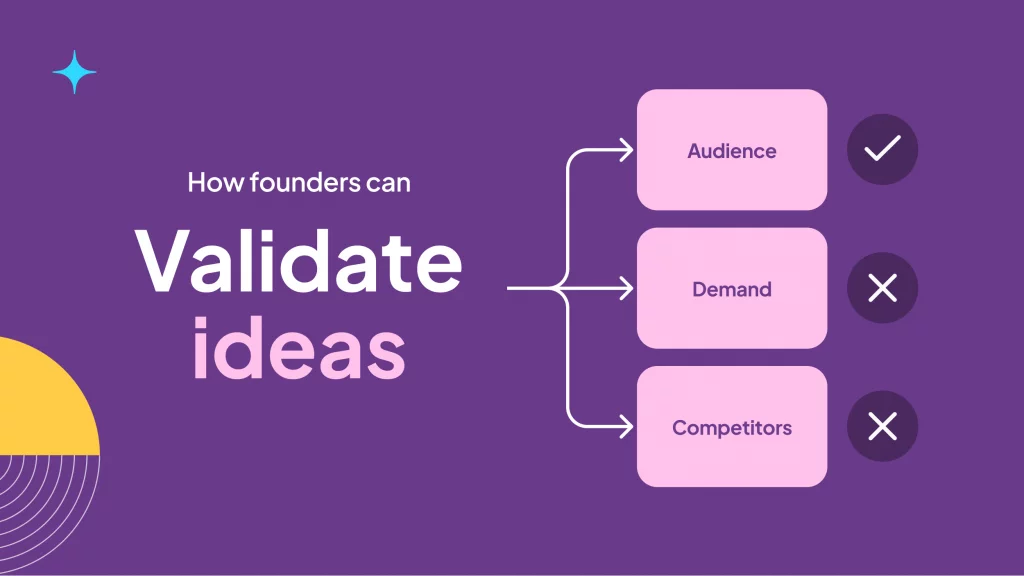
AI doesn’t validate demand
One of the most common mistakes founders make is jumping straight into creation mode.
The idea feels good.
The AI generates a prototype.
The product starts taking shape.
But nobody has answered the critical questions:
- Who is this actually for?
- What problem does it solve?
- How are people solving this today?
- Is the problem painful enough to pay for?
- What would make someone switch?
AI can help build a solution.
It can’t tell you whether anyone genuinely wants it.
Users don’t buy features
Another trap is assuming that more functionality equals more value.
AI makes it incredibly easy to add screens, workflows and features and before long, your product contains everything you imagined.
The problem?
Your users don’t care about your features.
They care about outcomes.
They want a problem solved faster, cheaper, easier or better than their current alternative.
Many SaaS products struggle because founders focus on what the product does rather than what the user is trying to achieve.
The user experience problem nobody talks about
A surprising number of AI-generated products are technically functional.
But they’re difficult to use, the flows don’t make sense.
Navigation feels disconnected and users aren’t sure what to do next.
The experience often reflects how the product was built rather than how people naturally think.
When founders test these products, they often hear:
- “I’m not sure what this does.”
- “I got stuck.”
- “I wasn’t sure where to start.”
- “I don’t really need this.”
That’s rarely a development issue, it’s usually a user understanding issue.
Good UX isn’t about making something look nice, it’s about helping users achieve their goals with confidence and as little friction as possible.
Why founders are getting stuck
The rise of AI has created a new challenge for founders.
Many can now build products themselves, but they still need clarity.
They need someone to challenge assumptions.
They need someone to help identify user problems worth solving.
They need someone to validate opportunities before investing more time and money.
In many cases, founders aren’t struggling because they lack technology.
They’re struggling because they’re too close to the idea.
Questions worth asking before building further
If you’ve launched a SaaS product and adoption is low, ask yourself:
- Have I spoken to potential users recently?
- Do I understand their existing workflow?
- Is the problem genuinely painful?
- Can users immediately understand the value proposition?
- Have I watched someone use the product without guidance?
- Am I solving a real problem or simply building an interesting idea?
The answers often reveal where the friction really exists.
AI is a powerful tool, not a product strategy
AI is changing how products are built, that’s not up for debate, but product success has never been determined by how quickly something can be created.
The products that succeed are still the ones that solve meaningful problems for real people and the founders who win won’t necessarily be the ones building fastest.
They’ll be the ones learning fastest. No matter how good AI becomes, understanding users remains one of the most valuable competitive advantages a business can have.
Final thoughts
If you’ve built a SaaS product with AI and aren’t seeing adoption, don’t assume the answer is more features, more screens or another development sprint.
Take a step back.
Talk to users.
Validate assumptions.
Review the experience.
Look for friction.
The problem may not be the product you’ve built.
It may be the problem you’re trying to solve.
And that’s often where the most valuable opportunities are found.
Building a product has never been easier.
Building the right product is still hard.
That’s where user research, product thinking and UX design continue to matter.
What to think about next?
If you’re exploring a SaaS product or tech idea and want to validation before investing heavily in development, a discovery call can help clarify your next steps.
Together, we can review:
- Your product idea and iterate
- Target audience and user problems
- MVP strategy
- User experience flows
- Validation opportunities before development begins
The goal is to identify whether your idea solves a real problem before committing significant time or resources.
Book a discovery call to discuss your SaaS idea and see whether I can help you move from concept to validated product with more confidence.


0 Comments
Nobody has left a comment yet, be the first and leave your thoughts.