06
Oct 26
Why UX thinking matters for startup founders and designers using AI
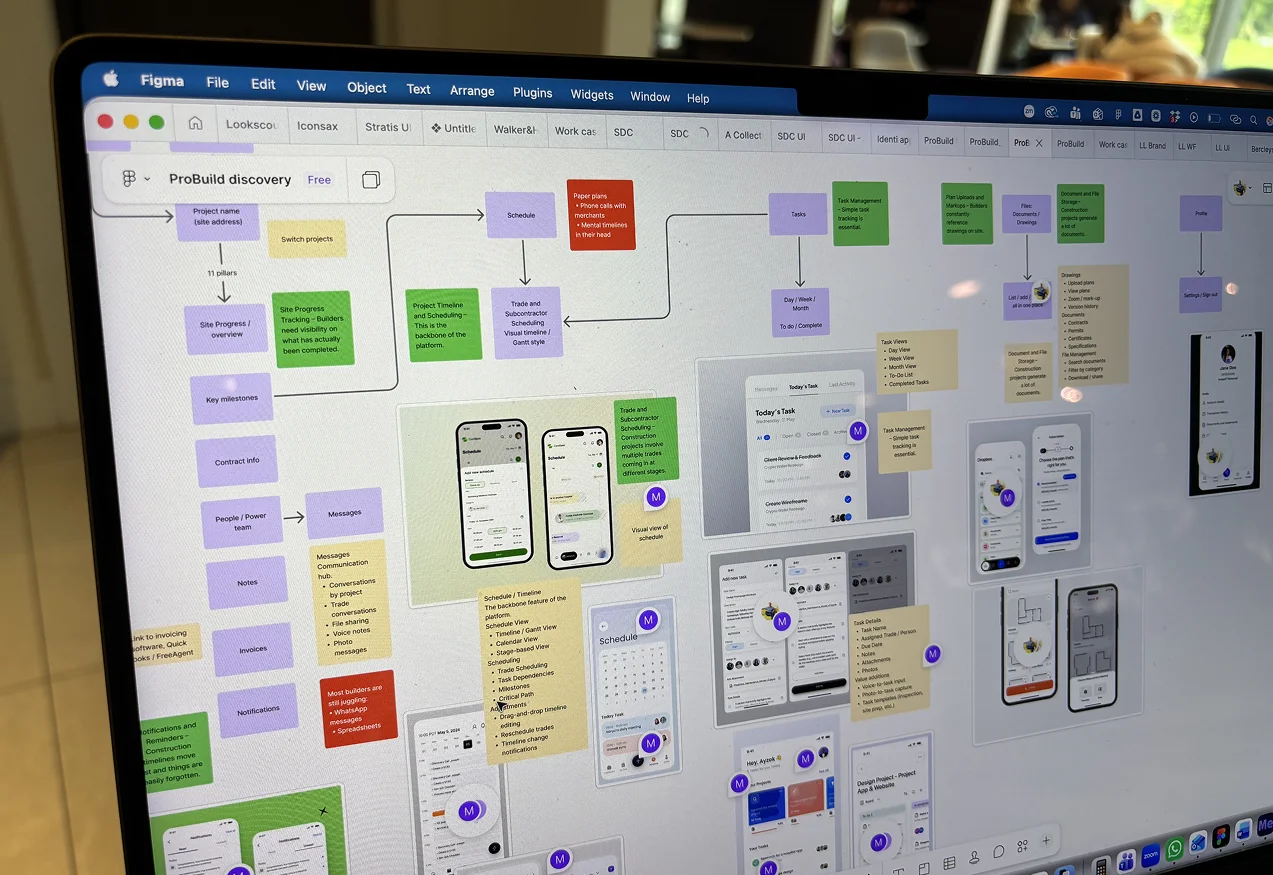
It is easy to see the appeal of AI in product design. You can take an idea, describe what you want and quickly have something tangible to explore. For a startup founder, that can make the first steps feel much more achievable.
For a junior designer, it also raises an important question: if a tool can produce the interface, where does your value sit?
My view is that the ability to understand a problem, question assumptions and make informed decisions becomes even more valuable. A convincing screen gives you something to discuss. It does not establish whether you are solving a problem people care about.
A polished interface can hide unanswered questions
Imagine a founder developing a booking platform. They start with a dashboard, a calendar, customer profiles and automated reminders. The concept looks complete, and it is tempting to move straight into development.
But what is the biggest difficulty for the people using it?
Perhaps customers struggle to find a suitable appointment. Perhaps staff spend too much time rearranging bookings. Perhaps people abandon the process because they cannot see the full price until the final step.
Each problem suggests a different priority. Adding more features to the dashboard may do little to improve any of them.
This is where UX work earns its place. It helps you understand the situation well enough to decide what deserves attention before you invest in building it.
The learning challenge for junior designers
The concern is not that junior designers use AI. Exploring new tools is a useful part of learning.
The concern is what happens when producing an answer takes the place of investigating the question.
Working through research, rough sketches and competing approaches helps designers develop judgement. You learn why an idea fails, which constraints matter and how someone else’s behaviour can challenge your assumptions.
If you accept a generated design without examining those decisions, you can miss that learning. You might be able to present a polished flow while struggling to explain why it is appropriate.
A useful habit is to explain every significant decision:
- What user need does this address?
- What evidence supports the approach?
- What alternatives did we consider?
- What are we assuming?
- How will we check whether it works?
These questions are valuable at every experience level.
Founders need the same discipline
For founders, the ability to produce something quickly can make an idea feel further developed than it really is.
A prototype may show how a product could work. You still need to understand who needs it, what they do today and whether your proposed approach improves their situation.
Before expanding an AI-generated concept, define the core task. Identify the biggest uncertainty and find a practical way to investigate it. That might mean speaking to potential customers, observing an existing process or testing a simple prototype.
For example, asking someone whether they like your booking platform tells you less than watching them try to find and rearrange an appointment. Their actions reveal where the experience needs work.
That evidence gives your next design iteration a clearer purpose.
Give AI a defined role in the process
AI can be useful for exploring alternative layouts, drafting copy and making early ideas easier to discuss. The key is to review the output against the problem you are trying to solve.
Treat generated personas as hypotheses until they are supported by research. Check research summaries against the original material. Review proposed journeys for missing steps, accessibility needs, error states and practical business constraints.
You remain responsible for deciding what is useful and what needs further investigation.
Used this way, AI can support the design process while leaving room for the learning and judgement that good product decisions require.
Start with a clearer problem
With more than 20 years in UX and product design, I place real value on the work that happens before a polished interface: clarifying the challenge, understanding users and deciding where to focus.
That applies whether you are a designer developing your skills or a founder shaping your first product.
Before asking a tool to create the next screen, ask what someone needs to achieve and what is stopping them. The answer may lead to a new screen, a simpler journey or a feature you no longer need to build.
If you have used AI to develop an early product and need help deciding what comes next, I can help you review the experience, identify the gaps and establish clear priorities.
Book a discovery call with me, Richard at RH Digital. Lets discuss your product and the next steps.


0 Comments
Nobody has left a comment yet, be the first and leave your thoughts.