11
May 26
How founders can validate a SaaS or product idea before building
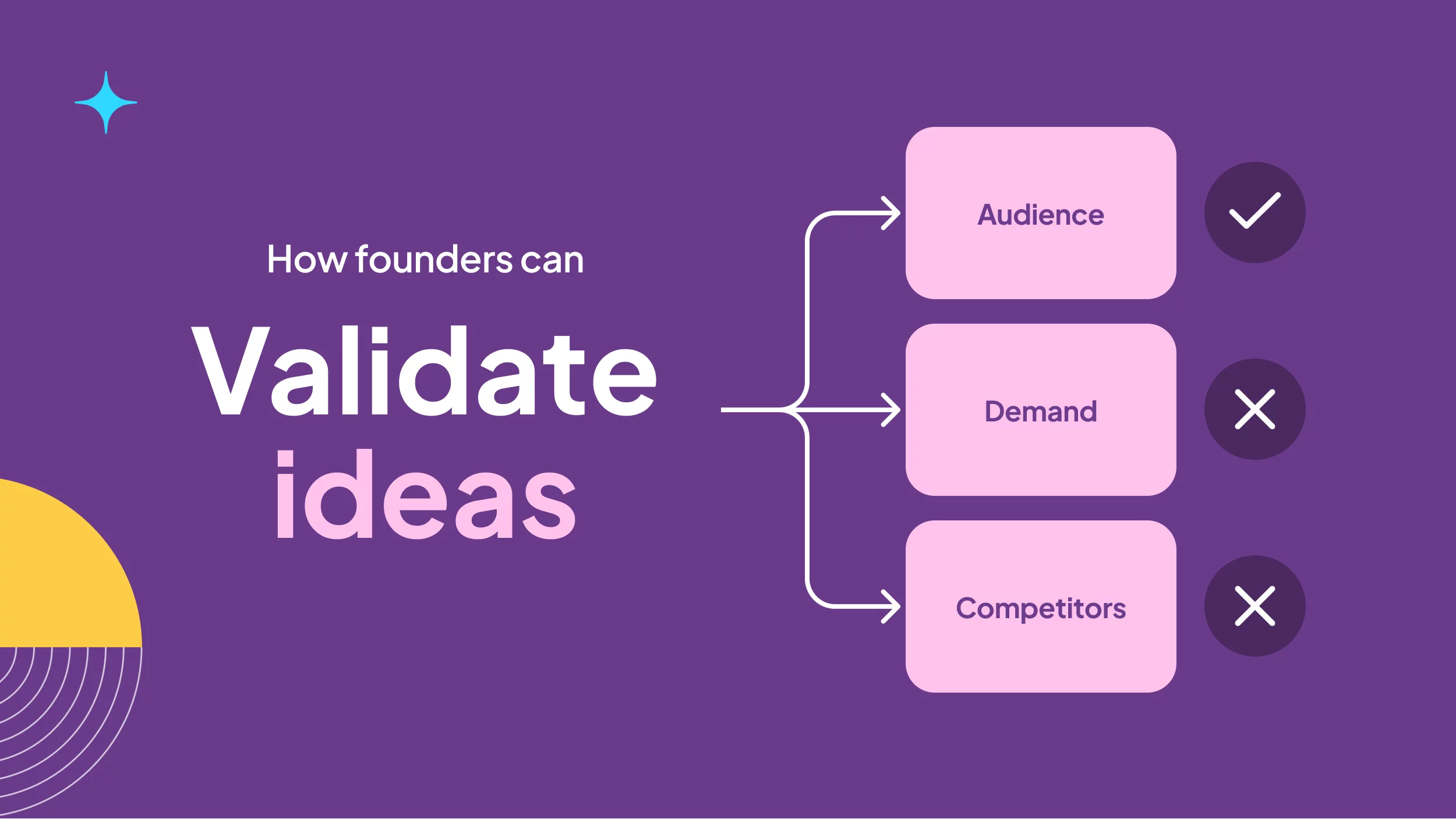
Every year, thousands of SaaS products are launched with great intentions and quietly disappear a few months later. Not because the founders lacked technical skills or funding, but because they built something nobody truly needed.
The biggest mistake early-stage founders make is treating product development as the first step. In reality, validation comes first.
Right from the start founders need evidence that:
- A real problem exists
- People actively want a solution
- Customers are willing to pay
The good news?
You don’t need months of development or a massive budget to validate a SaaS idea.
You can do it quickly, leanly and intelligently.
Here’s how.
Start with the problem, not the product
Most failed SaaS ideas begin with: “Wouldn’t it be cool if…”
Successful SaaS companies begin with: “People are struggling with this every day.”
Validation starts by identifying painful, recurring problems.
A strong SaaS opportunity usually has these characteristics:
- The problem happens frequently
- Existing solutions are frustrating or expensive
- Businesses lose time or money because of it
- People already try to solve it manually
If dozens of people describe the same pain point in different ways, that’s a signal worth investigating.
Define a specific target audience
A common validation mistake is targeting “everyone.”
Broad markets create vague products.
Narrow markets create clarity.
Instead of: “Project management software”
Try:
- “Project management for freelance video editors”
- “Workflow software for small law firms”
- “Scheduling tools for cleaning companies”
Specific audiences make validation easier because:
- Messaging becomes clearer
- Problems become easier to identify
- Competition becomes more manageable
- Customer acquisition becomes cheaper
The more specific your initial niche, the faster you can validate demand.
Conduct problem interviews
Before building anything, talk to potential users.
- Not friends.
- Not family.
- Not random people.
Talk to the exact users you want to serve.
The goal is not to pitch your idea, the goal is to understand:
- Their workflow
- Their frustrations
- Current solutions
- Costs of the problem
- Existing alternatives
Avoid asking:
- “Would you use this?”
- “Do you think this is a good idea?”
People often say “yes” to be polite.
Instead, ask:
- “How are you solving this today?”
- “What’s the hardest part about this process?”
- “How much time does this take weekly?”
- “What tools are you currently paying for?”
- “What have you already tried?”
Real validation comes from behaviour, not opinions.
Validate search demand
If people actively search for solutions, there’s likely market demand.
Use tools like:
- Google Keyword Planner
- Ahrefs
- SEMrush
- Ubersuggest
- Exploding Topics
Look for keywords such as:
- “best invoicing software for freelancers”
- “CRM for dentists”
- “automate employee onboarding”
Search demand helps validate:
- Market awareness
- Existing pain
- Buyer intent
However, low search volume does not automatically mean a bad idea, especially in B2B SaaS niches.
Some highly profitable SaaS products serve small but valuable markets.
Study existing competitors
Competition is usually a good sign.
If competitors exist, it means:
- Customers already spend money in the market
- The problem is real
- Businesses value solutions
Analyse competitors carefully:
- Pricing
- Features
- Customer complaints
- Positioning
- Reviews
- Onboarding experience
Pay special attention to negative reviews, negative reviews reveal market gaps.
For example:
- “Too complicated”
- “Too expensive”
- “Poor customer support”
- “Missing integrations”
- “Hard to learn”
These frustrations often become opportunities for differentiation.
Create a simple landing page
You don’t need a product to test interest.
You only need:
- A clear value proposition
- A compelling headline
- A description of the outcome
- A call-to-action
Your landing page should answer:
- What is this?
- Who is it for?
- What problem does it solve?
- Why is it better?
Examples of calls-to-action:
- Join waitlist
- Book demo
- Early access
- Get beta invitation
- Request pricing
This helps measure:
- Interest
- Conversion rate
- Messaging effectiveness
Test willingness to pay early
Interest is not validation.
Payment is validation.
Many founders validate attention but never validate purchasing intent.
Before building, test whether people will pay.
Ways to test:
- Pre-orders
- Paid waitlists
- Deposits
- Consulting-style onboarding
Even a small payment signal is powerful evidence.
If users refuse to pay before the product exists, that’s important information.
Build a No-Code MVP with a product designer
Before investing months into development, founders should focus on validating the user experience first and that’s where a product designer can make a major difference.
A product designer can help transform an early SaaS idea into a simple, testable MVP without writing production-level code.
Instead of building a fully functional platform, the goal is to create a realistic version of the product that demonstrates how the experience works and whether users actually find value in it.
Measure engagement, not compliments
Founders often get trapped by positive feedback.
People saying:
- “This is awesome”
- “Great idea”
- “I’d totally use this”
means very little.
Better validation signals include:
- Users booking calls
- People joining waitlists
- Customers paying deposits
- Repeat usage
- Referrals
- Requests for access
- Users following up without reminders
Real demand creates momentum naturally.
Know when to pivot or kill the idea
Validation is not about proving yourself right.
It’s about discovering the truth quickly.
If you notice:
- Weak interest
- Low conversion rates
- No urgency
- Poor retention
- No willingness to pay
you may need to:
- Adjust positioning
- Target a different niche
- Simplify the offer
- Solve a more painful problem
- Or abandon the idea entirely
This is not failure.
It’s far cheaper to pivot during validation than after spending six months building software nobody wants.
Final thoughts
The fastest way to waste time in SaaS is building too early.
Validation reduces risk, saves money and increases your odds of finding real product-market fit.
Before writing a line of code, founders should aim to answer three critical questions:
- Is this a real problem?
- Do enough people care?
- Will customers pay to solve it?
If you can confidently answer “yes” to all three, then building becomes much less risky — and much more strategic.
The best SaaS founders don’t fall in love with features.
They fall in love with solving painful problems better than anyone else.
Need help validating your SaaS idea?
If you’re exploring a SaaS product or tech idea and want to validation before investing heavily in development, a discovery call can help clarify your next steps.
Together, we can review:
- Your product idea
- Target audience and user problems
- MVP strategy
- User experience flows
- Validation opportunities before development begins
The goal is to identify whether your idea solves a real problem and how to test it quickly and effectively before committing significant time or resources.
Book a discovery call to discuss your SaaS idea and see whether I can help you move from concept to validated product with more confidence.




0 Comments
Nobody has left a comment yet, be the first and leave your thoughts.